
Drawing Project: Walk & Draw Milano
August - September 2025
Walk & Draw: walking and drawing at the same time, is a way of drawing in which the drawing seems to emerge by itself, using quick drawing materials such as coloured felt-tip pens.
I use my senses to record what I hear and see while walking around the roof of the Duomo Milano.
Every time I change direction or hear a new sound, I use a new colour marker, and these lines come together in a single image. The drawings give an impression of the space around us from a sensitive perspective.
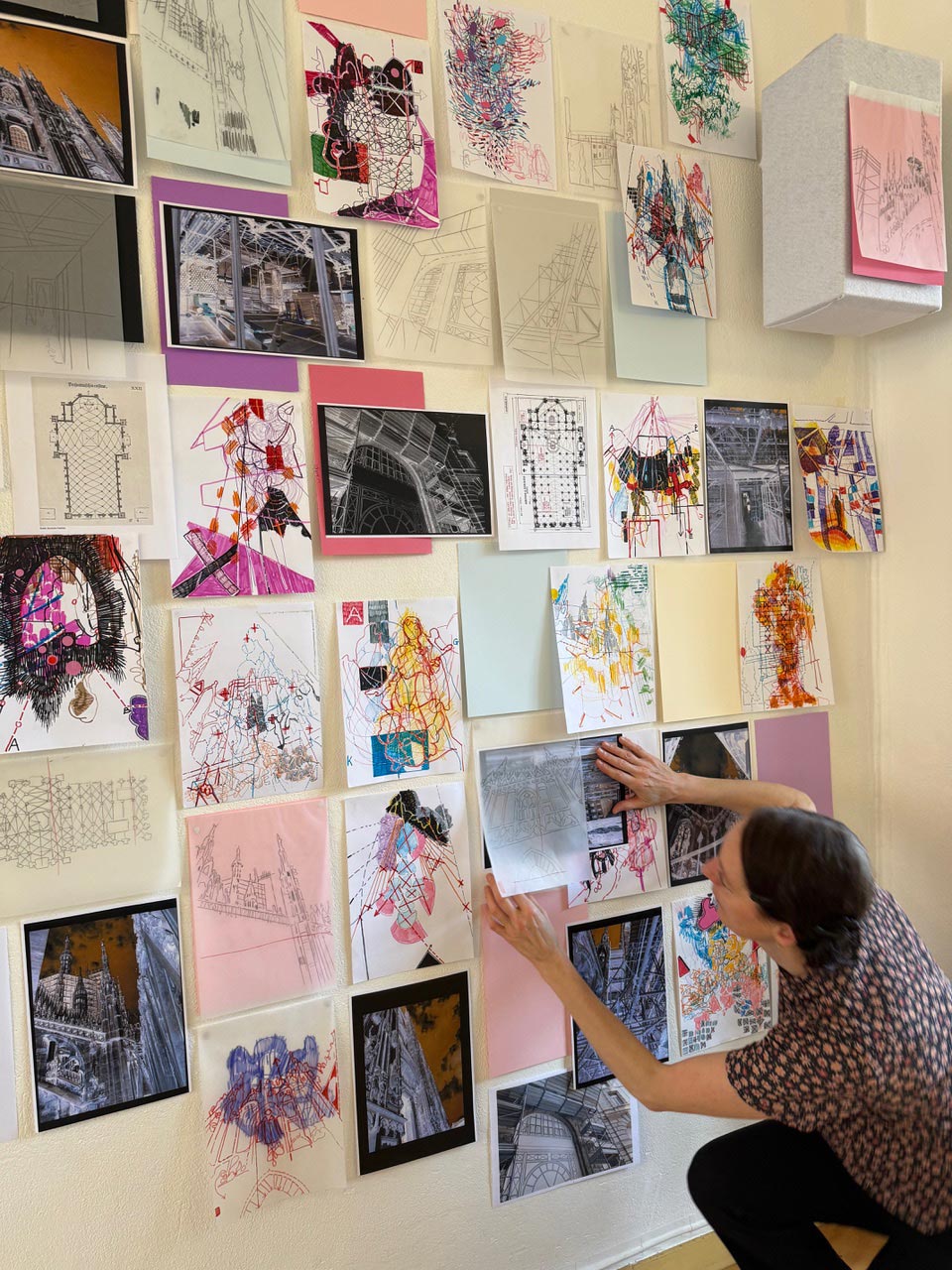
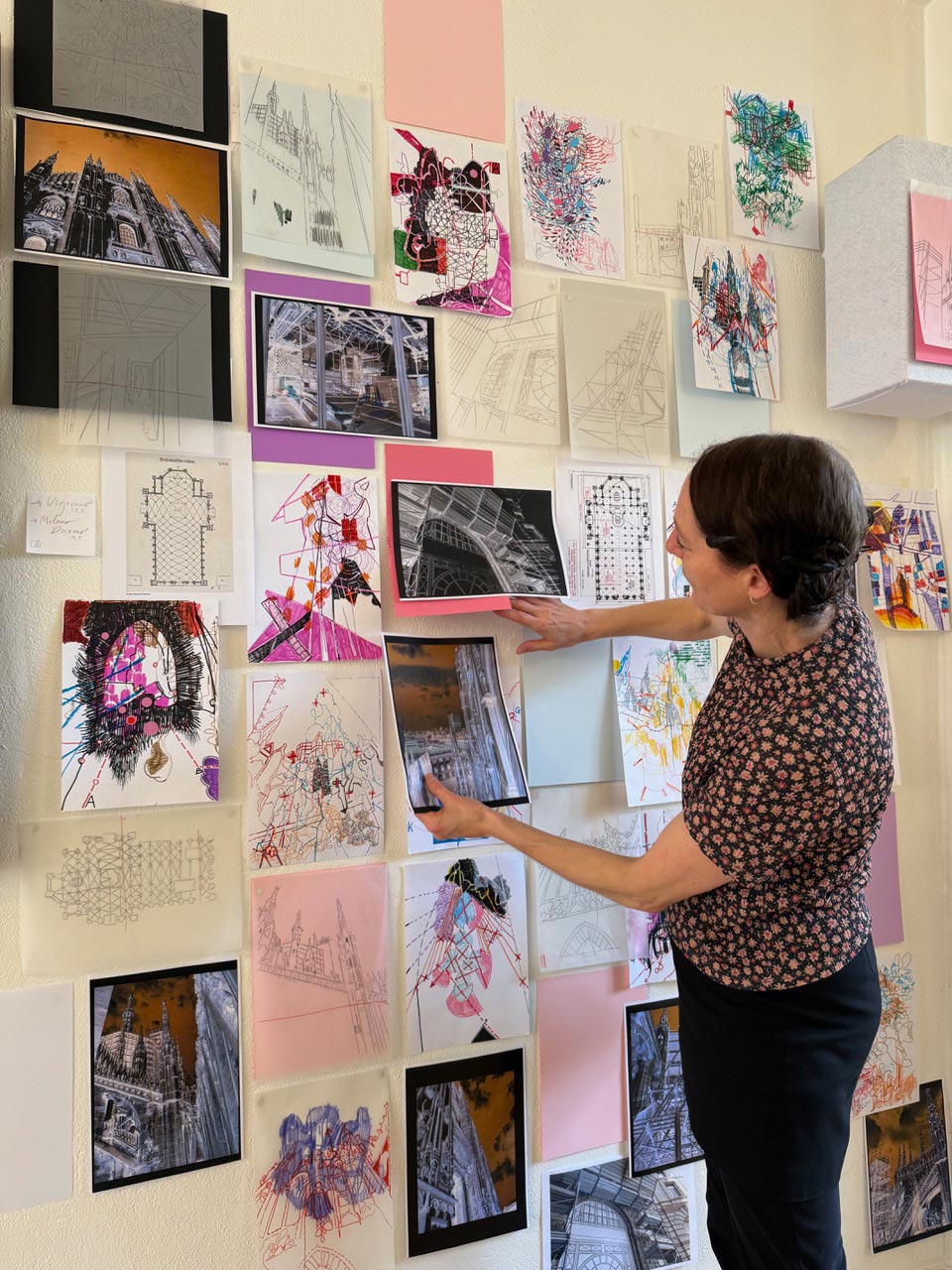
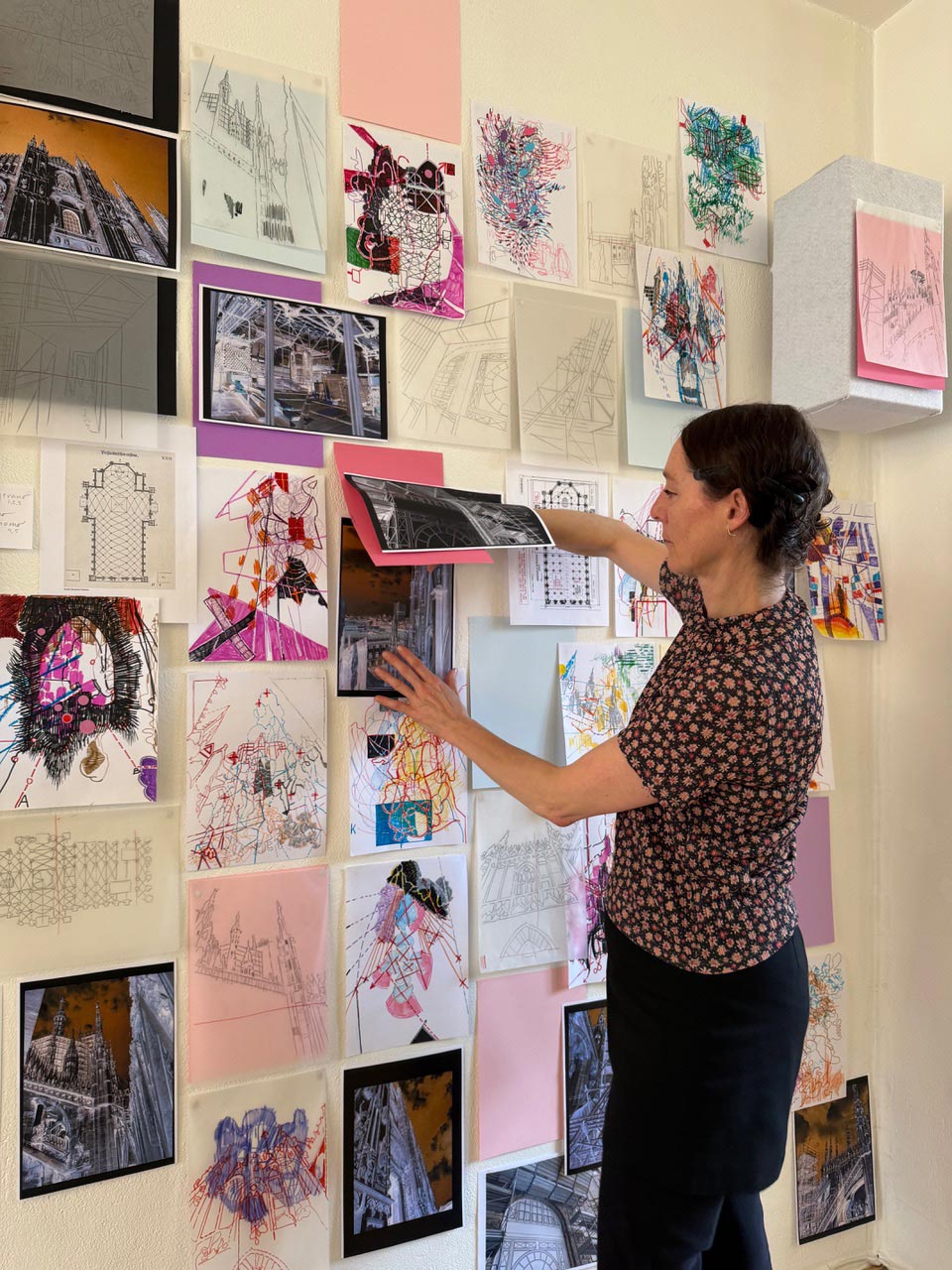
At work

Amsterdam Drawing 2016

The work of Sarah can be seen as a solo presentation at Galerie Zerp.
More information on the website van Drawing Amsterdam.
Studio, august 2014

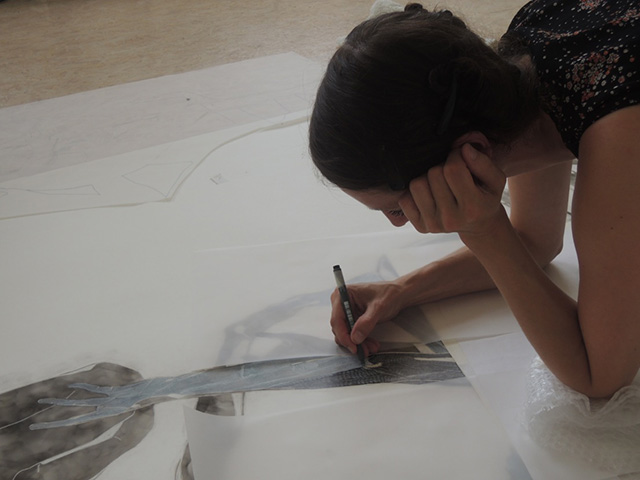


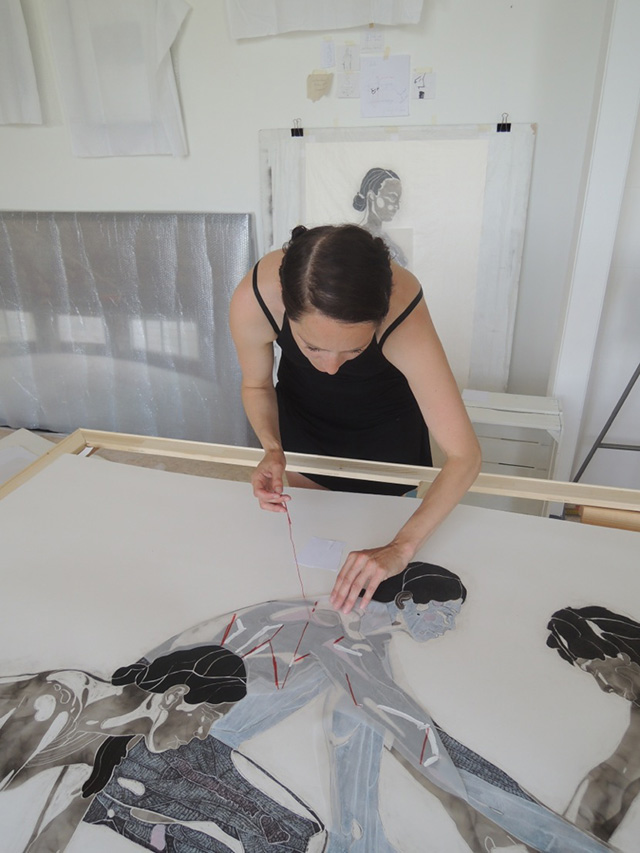
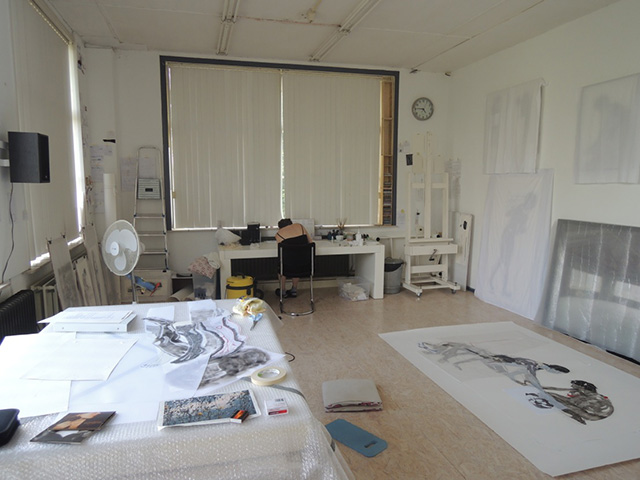
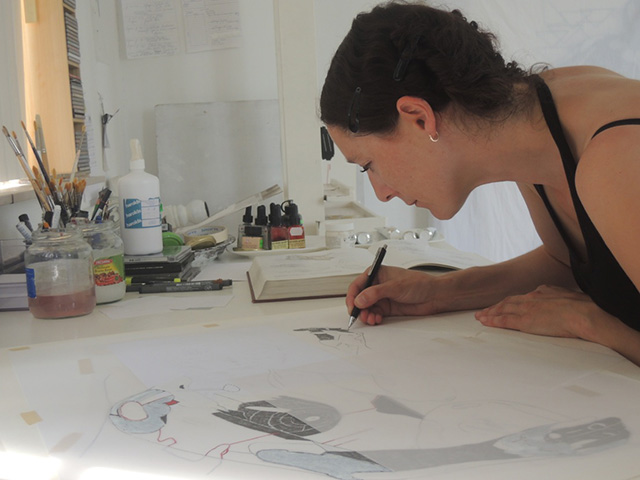

Foto's door Donald Schenkel
Ege University Izmir, Turkey

6 t/m 15 december 2013
Ege Art Izmir, Turkey
Ege University Izmir
Collaboration with the students of Ege University
Lecture by Sarah van der Pols
Denizli 2012

5 t/m 20 mei 2012
Intercultural Painting Project Denizli, Turkey
Cafer Sadik Abalioglu Cultural Foundation Samenwerking met de studenten van Pamukkale University
Lecture by Sarah van der Pols
Project overview summer 2012 Sestosenso Gallery Roma
PAMUKKALE DAY, PAMUKKALE NIGHT
Two Drawings realized by Sarah van der Pols during the International Painting Project
Denizli, Turkey/ may 2012
Size of the drawings: 210 x 140 cm
Year: 2012
Technique: transparent sheets, pencil, pigment liner, acid free tissue tape, acrylic paint, graphite
and silk treads on Fabriano 300 grams natural white paper.
In the two large drawings Pamukkale Day and Pamukkale Night the transparent paper on which the people are drawn plays an important role. This transparent paper is a strong but also very vulnerable material, a material that can be easily torn apart. The transparent paper could be compared to the human body. Blood, bones and skin make the body solid but on the other hand, just like the paper it is
easily damaged.
In the drawings we meet people, a few adults and a child. A woman is lying on the ground as if she is listening to the earth. Another woman bends over to see what the lying figure is doing. The lines that come out of her body connect her to her surrounding. The main standing black figure overlooks everything like a guard controlling the night. On the right a man and a woman are starting to dance, there is tension in the air between them. Looking at the ground we find people buried underneath the soil, our ancestors seemingly present in this event. They watch over this celebration of energy during the night while everyone else is sleeping.
Numbers, arrows and lines are symbolic for the transformation of energy, while at the same time being a symbol for the incapacity of human beings to let go. People try to keep everything under control. We also need to let go and let nature do its work. We are all part of this inevitable process, being born, growing older and die. Try to pay tribute to life in the moment of the day.
The silk threads used also connect people and surroundings to one another. These threads are like the transparent paper, strong, but easily to cut trough. On occasion they refer to timelines.
In the end it is the concept that al energy transforms into new life forms.
Cultural history: in the background of the drawings you see Pamukkale Mountain. This is the place where in this edition of the Cultural Painting Project the energy of the people and their surroundings came together.